



- Room 1807, Unit 9, Building 2, Shangxing Commercial Street, Shangde Road, Shangxing Community, Xinqiao Subdistrict, Bao'an District, Shenzhen City, China
CONTACT US

WhatsApp


Contact Us
Our team is on stand by, waiting toassist you.

Videos
A large collection of educational videos and tutorials.

About Us
Learn about our company, leadership, and mission totransform manufacturing.

Privacy Policy
Applies to all personal information collected through and/or processed in connection.


Aerospace & UAV
WJ Prototypes is your 3D manufacturing partner from prototype to large scale production.

Consumer Electronics
New Product Introduction Solutions for Consumer Electronics.

Robotics & Automation
Need some assistance bringing your robotic device or parts from the sketch-board to reality?

Medical Devices
The medical industry needs high quality, dependable and safe parts and products.

Automotive
New Product Introduction Solutions for Automotive

Industrial Machinery
The main purpose of industrial prototyping is to take the product from drawings into the real world.
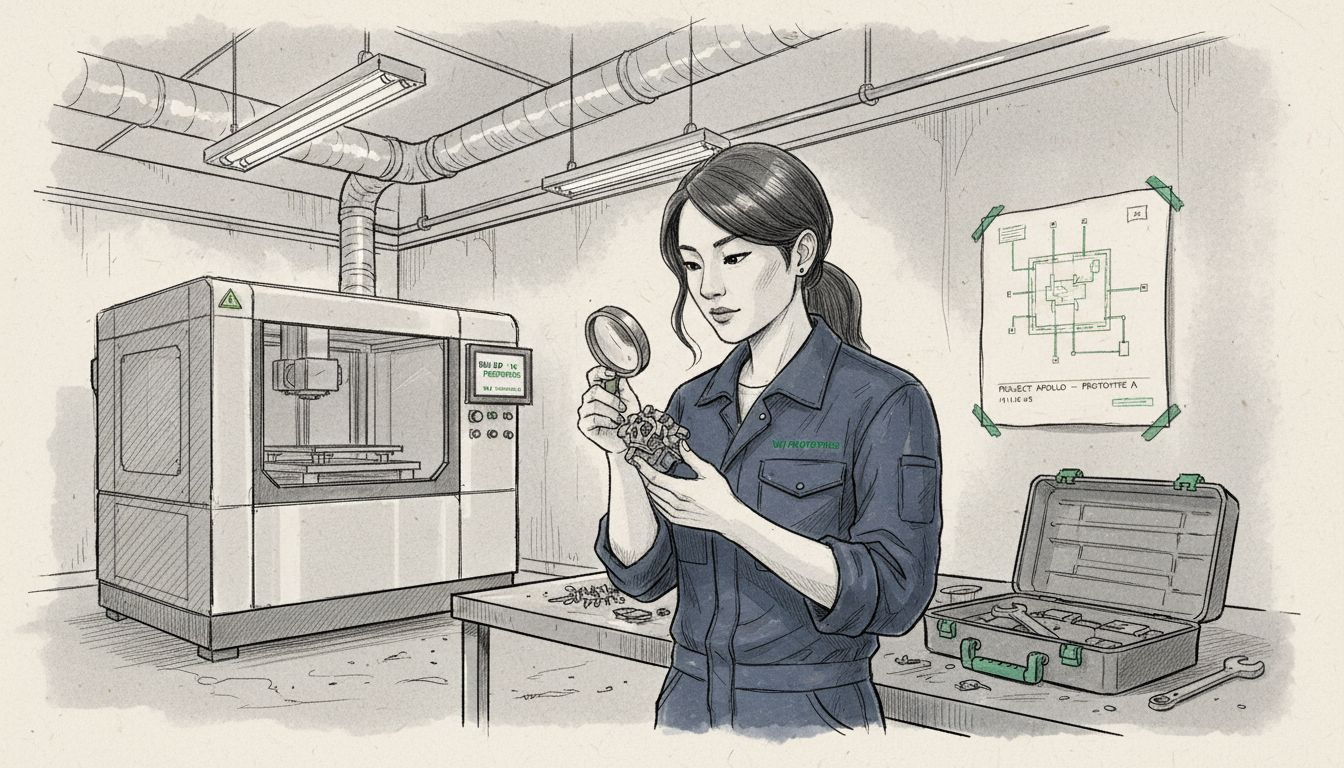
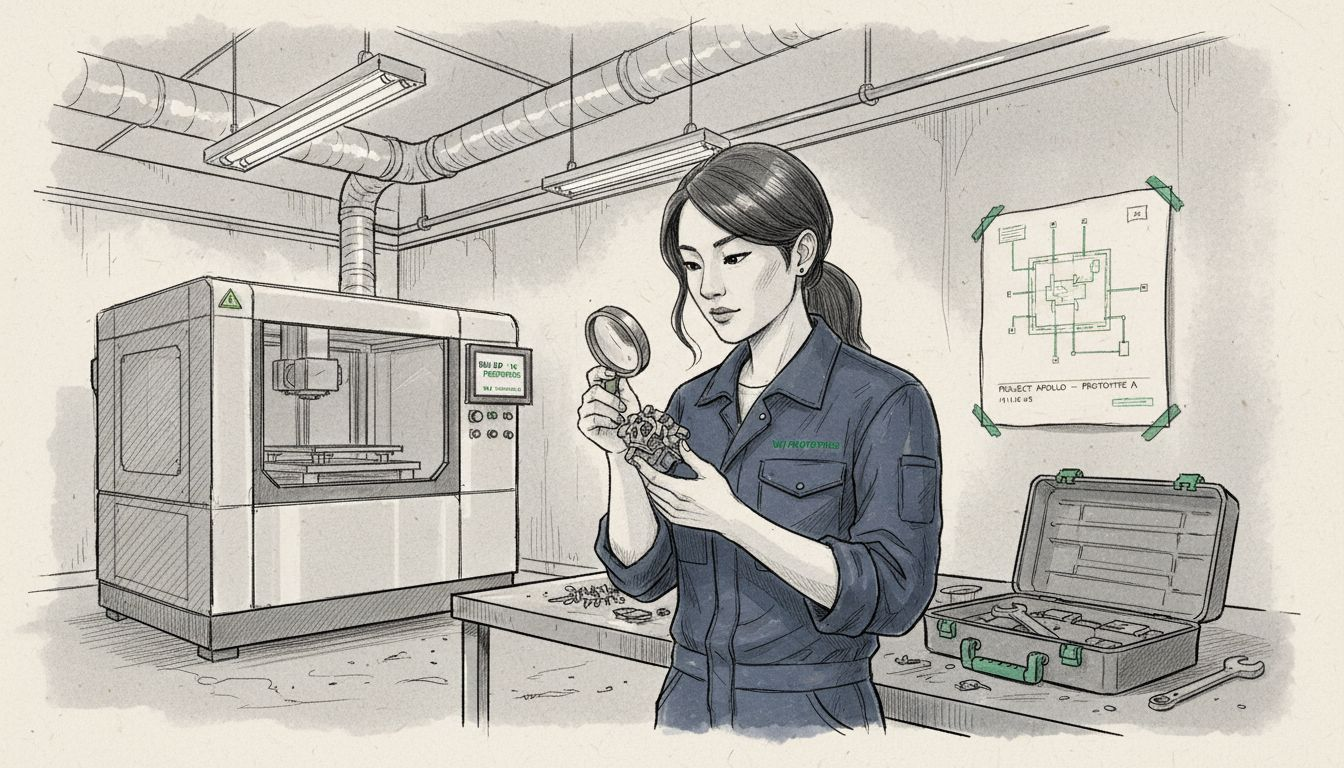
Most british aerospace and automotive teams are discovering that Direct Metal Laser Sintering can achieve part densities above 99 percent, rivaling those from traditional metal manufacturing. For engineers looking to speed up rapid prototyping without sacrificing performance, DMLS offers new possibilities for complex geometries and robust material properties. This overview clarifies what DMLS truly is, dispels common myths, and gives you practical insights to choose the right prototyping solutions for your next project.
| Point | Details |
|---|---|
| DMLS Process | Direct Metal Laser Sintering allows for the production of intricate metal components with superior mechanical properties by fully melting metal powder. |
| Misconceptions Clarified | DMLS is often confused with SLS; however, it offers higher metallurgical precision and quality comparable to traditional methods. |
| Material Versatility | DMLS supports various metallic powders like titanium and stainless steel, each providing unique advantages suitable for specific applications. |
| Design Freedom | The technology facilitates complex geometries and lightweight designs, enhancing innovation in industries like aerospace and automotive. |
Direct Metal Laser Sintering (DMLS) represents an advanced additive manufacturing technique that enables engineers and designers to produce intricate metal components with exceptional precision. Unlike traditional manufacturing methods, DMLS utilises a powerful laser system to selectively melt and fuse metal powder particles, creating fully functional three-dimensional parts directly from digital design files.
The core distinction of DMLS lies in its fundamental process mechanism. Precise powder melting techniques differentiate this technology from conventional metal fabrication approaches. While traditional sintering methods merely bind powder particles, DMLS completely liquefies and fuses metal powder, resulting in parts with superior mechanical properties and structural integrity. This full melting process ensures near-complete density and significantly enhanced material performance.
Several common misconceptions surround DMLS technology that merit clarification. Many professionals mistakenly believe DMLS is identical to selective laser sintering (SLS) or that it produces low-quality parts. In reality, DMLS offers remarkable metallurgical precision, creating components with mechanical properties comparable to traditionally manufactured metal parts. The technology supports complex geometries impossible through conventional machining, enabling unprecedented design freedom for aerospace, automotive, and medical engineering applications.
Pro tip: When considering DMLS for your project, always validate the specific material compatibility and thermal properties to ensure optimal part performance and dimensional accuracy.
Here’s a concise comparison of DMLS, SLS, and traditional metal fabrication techniques:
| Manufacturing Method | Material State After Processing | Geometric Flexibility | Typical Applications |
|---|---|---|---|
| DMLS | Fully melted, dense metal | Extremely high | Aerospace, medical |
| SLS | Sintered, not fully melted | High | Prototyping, tooling |
| Conventional Metal | Solid metal, machined or cast | Moderate | Mass production |
Direct Metal Laser Sintering (DMLS) operates through a sophisticated layer-by-layer manufacturing process that transforms digital designs into precise metallic components. The technique begins with a thin layer of metal powder carefully spread across a build platform, creating an environment where advanced manufacturing meets microscopic precision.

Advanced laser melting techniques enable the system to selectively melt metallic powders using a high-powered laser beam. Each layer is meticulously scanned and fused according to the three-dimensional computer-aided design (CAD) file, with laser parameters precisely controlling power, speed, and energy density. The laser moves strategically across the powder bed, instantaneously melting and solidifying metal particles into a cohesive, dense structure that reflects the exact digital blueprint.
The DMLS process involves several critical stages of thermal management and material interaction. Thermal profile modelling plays a crucial role in understanding how heat distribution affects part quality. As each subsequent layer is added, the previously deposited layer partially reheats, creating a complex thermal environment that influences mechanical properties. This intricate process allows for the creation of parts with exceptional structural integrity, minimal porosity, and near-net-shape precision that traditional manufacturing methods cannot achieve.
Pro tip: Always validate your CAD file’s resolution and ensure your powder particle size matches the desired feature details to maximise DMLS manufacturing success.
Direct Metal Laser Sintering (DMLS) has revolutionised manufacturing processes in both aerospace and automotive sectors, offering unprecedented design flexibility and performance enhancement. By enabling complex geometries and intricate component designs that were previously impossible with traditional manufacturing methods, DMLS has become a game-changing technology for engineers seeking innovative solutions.
Advanced aerospace manufacturing techniques have demonstrated remarkable potential in creating lightweight, high-performance components. In aerospace applications, DMLS enables engineers to produce intricate turbine blades, lightweight structural elements, and complex cooling channels with unprecedented precision. These components can significantly reduce aircraft weight, improve fuel efficiency, and enhance overall mechanical performance. The automotive industry similarly benefits from DMLS, utilising the technology to develop sophisticated engine components, lightweight structural parts, and specialised racing vehicle elements that demand exceptional material properties.
The technology’s unique capabilities extend beyond mere part production. Polymer composite development through DMLS allows manufacturers to create advanced materials with enhanced thermal resistance and mechanical strength. This breakthrough enables the production of components that can withstand extreme environmental conditions, particularly crucial in aerospace and high-performance automotive applications. Engineers can now design parts with integrated cooling channels, complex internal geometries, and optimised weight-to-strength ratios that were previously unachievable through conventional manufacturing techniques.
Pro tip: Collaborate closely with materials engineers during the design phase to fully leverage DMLS capabilities and optimise part performance across aerospace and automotive applications.
Direct Metal Laser Sintering (DMLS) offers engineers a remarkable array of material choices, each presenting unique characteristics and manufacturing considerations. The technology supports an impressive range of metallic powders, enabling designers to select materials precisely matched to their specific performance requirements and application demands.
Metallic powder selection strategies reveal multiple material options including stainless steels, titanium alloys, aluminum, and nickel superalloys. These materials present distinct advantages: stainless steels offer excellent corrosion resistance, titanium provides exceptional strength-to-weight ratios, aluminum ensures lightweight performance, and nickel superalloys deliver superior high-temperature capabilities. Each material requires meticulous powder characterisation, with factors like particle size, morphology, and distribution critically influencing the final part’s mechanical properties and dimensional accuracy.
Design constraints represent another crucial aspect of DMLS manufacturing. Thermal stress management techniques demonstrate that complex geometries must account for potential residual distortions and anisotropic mechanical properties. Engineers must carefully consider minimum feature sizes, necessary support structures, and potential thermal-induced deformations. Typical design constraints include maintaining minimum wall thicknesses, managing overhang angles, and strategically planning support structures to mitigate potential warping or structural inconsistencies during the laser sintering process.

Pro tip: Consult material-specific design guidelines and conduct preliminary thermal simulations to optimise your DMLS part geometry and minimise potential manufacturing challenges.
Below is a summary of leading DMLS material options and engineering advantages:
| Material Type | Key Engineering Benefit | Common Industry Use |
|---|---|---|
| Stainless Steel | Superior corrosion resistance | Automotive |
| Titanium Alloy | High strength-to-weight ratio | Aerospace |
| Aluminium | Lightweight structural support | Racing components |
| Nickel Superalloy | High-temperature durability | Turbine blades |
Direct Metal Laser Sintering (DMLS) presents a sophisticated manufacturing approach with compelling advantages that simultaneously introduce nuanced engineering challenges. Engineers and designers must carefully weigh the technology’s unique capabilities against its inherent constraints to determine optimal implementation strategies for specific project requirements.
Advanced manufacturing technologies reveal remarkable advantages of DMLS, including unparalleled design complexity, material efficiency, and minimal waste production. The technology enables unprecedented geometric freedom, allowing engineers to create intricate internal structures, complex cooling channels, and lightweight components impossible through traditional manufacturing methods. Key strengths include rapid prototyping capabilities, reduced material consumption, and the ability to produce parts with near-net-shape precision that minimises subsequent machining requirements.
Mechanical property evaluations highlight critical limitations inherent in DMLS technology. Potential challenges include inherent material porosity, anisotropic mechanical properties, and sensitivity to precise processing parameters. Surface finish variations and potential thermal-induced distortions represent additional constraints that engineers must strategically address. Alternative technologies such as electron beam melting, directed energy deposition, and traditional subtractive manufacturing methods offer complementary approaches, each with distinct performance characteristics that might better suit specific engineering requirements.
Pro tip: Conduct comprehensive computational simulations and prototype testing to accurately assess DMLS performance against alternative manufacturing techniques for your specific application.
Understanding the intricate process of Direct Metal Laser Sintering reveals the challenges of achieving precise, high-quality metal parts that meet stringent aerospace and automotive standards. If you want to overcome issues like material porosity, thermal distortion or complex design constraints, partnering with a specialised manufacturer is crucial. DMLS demands meticulous control over powder characteristics, laser parameters and thermal management to deliver parts with exceptional mechanical properties and dimensional accuracy.
At WJ Prototypes, we combine advanced DMLS technology with deep industry expertise to help you bring complex metal prototypes and low-volume production parts to life. With our ISO-certified manufacturing processes and engineering support, you gain access to:
Do not let design challenges limit your product development. Visit WJ Prototypes now to discover how our rapid prototyping and manufacturing services can accelerate your project with speed and confidence. Start your quote today and turn your DMLS concepts into tangible precision components ready for the market.
Direct Metal Laser Sintering (DMLS) is an advanced additive manufacturing technique that uses a powerful laser to melt and fuse metal powder particles layer by layer, creating precise, fully functional three-dimensional components from digital design files.
DMLS supports a wide range of metallic powders, including stainless steels, titanium alloys, aluminium, and nickel superalloys, each chosen for their unique properties tailored to specific applications.
The advantages of DMLS include exceptional design complexity, material efficiency, the ability to create lightweight components, rapid prototyping, and reduced material waste, allowing for parts that closely resemble their digital designs with minimal need for additional machining.
DMLS may encounter limitations such as inherent material porosity, anisotropic mechanical properties, the sensitivity of processing parameters, and potential thermal-induced distortions. Engineers must address these challenges during the design and manufacturing process.
SERVICES
RESOURCES